
The Cost of Political Loyalty
Deception PointThis flow explores the people harmed when loyalty to a candidate or institution is treated as more important than independent judgment and human safety.
increasing Bearing strength in each event
 decreasing
Bearing strength in each eventdecreasingGabrielle’s Investment

Gabrielle’s Investment
Belief in a candidate
Gabrielle’s early admiration for Sexton gives her work emotional meaning. She sees herself not merely as staff but as a participant in a political project she believes can improve government.
The career opportunity and personal attention become difficult to separate, especially after Sexton’s seduction and his continued control over her job.
Loyalty becomes a vulnerability
Her desire to prove herself makes her reluctant to question Sexton’s methods. She passes him useful information while hiding its true source, hoping to increase her value.
The relationship shows how political loyalty can be cultivated through ambition and access, leaving the aide vulnerable to manipulation.
NASA’s Institutional Loyalty
NASA’s Institutional Loyalty
Protecting a public mission
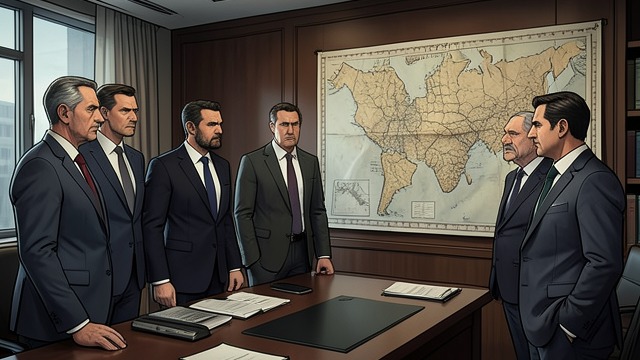
NASA’s leaders face a real danger that the agency will be dismantled or privatized. Lawrence Ekstrom and others fear the loss of scientific capacity and decades of public investment.
Their loyalty to the institution grows stronger as criticism intensifies, making setbacks feel like attacks on the agency’s existence.
Loyalty narrows judgment
That pressure helps explain why officials accept a false claim about PODS and why Ekstrom conceals Ming’s death until after the broadcast. The effort to protect NASA’s image begins to override duties to truth and people.
The institution becomes endangered not only by its critics but by defenders who treat reputation as more important than accountability.
Rachel’s Professional Duty

Rachel’s Professional Duty
An analyst’s obligation
Rachel initially endorses the discovery after examining it and hearing the civilian scientists. When contradictory evidence appears, she does not protect her earlier statement at the expense of her professional judgment.
She returns to first principles, asks what is known independently, and follows the evidence even when it threatens her career and relationship with the White House.
Loyalty without obedience
Rachel’s loyalty to the President’s office does not mean she must defend every claim made by the administration. She understands that her responsibility is to report what the evidence supports.
Her work demonstrates that service can require dissent, especially when a powerful institution asks for trust it has not earned.
A Team Sacrificed
A Team Sacrificed
People reduced to costs
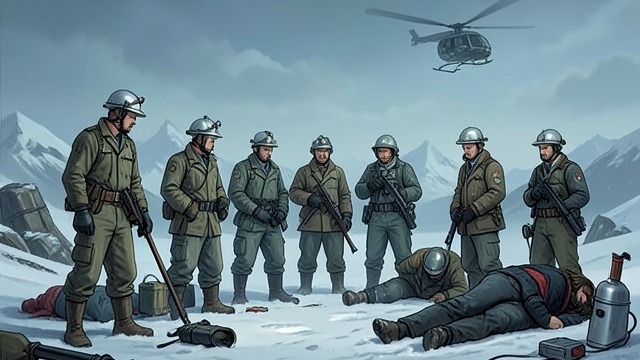
The attackers treat scientists and civilians as obstacles to mission success. The deaths of Brophy, Ming, and Norah show that human beings have become acceptable losses in the preservation of a secret.
Pickering’s national-security reasoning and Delta-One’s obedience both depend on separating orders from moral consequence.
The cost made visible
Rachel and Tolland survive repeated efforts to kill them, while the hidden violence spreads from the ice shelf to the Goya. The attempt to preserve NASA’s future destroys individual lives and the credibility of the institution.
The story challenges the abstract calculation that a few can always be sacrificed for a larger public good.
Choosing People Over Power

Choosing People Over Power
Gabrielle’s refusal
Gabrielle uses evidence against Sexton to stop him from distributing Rachel’s material as a campaign weapon. Her action rejects the loyalty she once believed she owed him.
Rachel also refuses to let her father’s political interests determine what happens to the evidence or to the President.
A different measure of success
Neither woman can prevent every loss, but both make choices that place truth and human consequences above a candidate’s advantage. Their actions expose the cruelty of treating people as campaign assets.
The ending defines meaningful loyalty as responsibility toward others, not obedience to the powerful person who claims it.
From her first campaign work
As the campaign threatens NASA
From the first fossil examination to the radar scan
During the attacks on the ice and at sea
The Washington Monument confrontation
